The latest news and blogs
AI is not replacing legal work: It is creating more of it.
Everyone assumes AI is bad news for lawyers. Fewer hours per matter, less work to go around, clients who can generate a first draft themselves before they ever pick up the phone. I understand the logic. I just think it is wrong.
Here is what I am actually seeing: AI is generating more demand for serious legal counsel, not less. And the companies that have decided this is the moment to reduce their reliance on lawyers are taking on substantially more risk than they realize.
The reason is not obvious, which is why I think it is worth laying out carefully.
The supply side is only half the story
When people talk about AI’s impact on legal services, they almost always focus on supply: AI drafts faster, researches faster, synthesizes faster. Less time per task means fewer billable hours per matter. The math seems to point toward contraction.
But supply-side efficiency does not exist in isolation. Demand has its own logic, and on the demand side, AI is doing something the efficiency narrative misses entirely: it is arming potential plaintiffs.
Combing through years of board minutes, parsing representations across a stack of deal documents, cross-referencing disclosure language against internal communications — this kind of forensic analysis once required significant legal spend and meaningful runway. It was available to well-funded adversaries and class action firms with the resources to invest in discovery. For most plaintiffs, it was simply not economical to look that hard.
That constraint is eroding. AI makes deep, granular scrutiny of corporate and transactional conduct far more accessible than it has ever been. Litigators I speak with are already seeing the early signs — claims surfaced not through a lawyer’s intuition or a client’s tip, but through AI analysis of documents that no human had previously read carefully enough to notice the discrepancy. The expectation among those closest to the litigation pipeline is that this is early innings.
“Claims are now being surfaced not through a lawyer’s intuition, but through AI analysis of documents that no human had previously read carefully enough to notice the discrepancy.”
What this means for deal lawyers specifically
For transactional lawyers, the implications are direct and worth sitting with.
The quality of work done at the front end of a transaction — how a representation is scoped, how a covenant is drafted, how risk is allocated in a provision that might look standard — now has a longer tail of legal exposure than it did before. A deal record that was good enough to close is no longer necessarily good enough to defend. If the other side has the ability to run sophisticated analysis across everything your client signed, the seams in that documentation will be found. The question is whether the original drafting anticipated them.
This is not an argument for over-lawyering. Obsessing over remote contingencies has never served clients well, and that does not change. The point is more specific: the strategic dimension of transactional work is becoming more consequential, not less. The lawyer who reads a deal only as a transaction to close — and not also as a record that may one day need to be defended — is leaving a material gap in the advice she is giving her client.
The cost of cutting lawyers out at exactly the wrong moment
This is also, I would note, a direct challenge to a conclusion that some business people are drawing right now — that AI drafting tools make lawyer involvement less necessary than it used to be. The logic is intuitive: if AI can generate a serviceable agreement in minutes, why pay for a lawyer to do what a machine can do faster and cheaper?
The problem is that the calculation omits what is changing on the other side of the table. The documents a company produces today are more scrutinizable than ever before — by counterparties, by regulators, and by plaintiffs who now have tools that can surface inconsistencies, ambiguities, and gaps that would have gone unnoticed a few years ago. Replacing lawyer judgment with AI output does not make a transaction any less exposed to challenge. It just removes the person whose job was to think carefully about where those challenges might come from.
An AI-generated agreement reflects the average of what has worked before. It does not know what is particular about this deal, this counterparty, this regulatory environment, or this client’s specific exposure. The seams in templated, unreviewed documentation have always existed. What is new is that the other side now has a cost-effective way to find them. The companies that are quietly cutting legal spend on the theory that AI handles the drafting are taking on more risk than they realize — at precisely the moment that the standard for what their documents need to withstand has gone up.
The demand that is actually growing
Step back from the individual transaction and the picture is consistent. AI is generating novel liability questions that existing legal frameworks were not built to answer — in finance, employment, contracting, healthcare, and well beyond. Regulatory responses are still being written. Precedent barely exists for the most consequential questions. And companies that might once have resolved close calls quietly are increasingly finding themselves in litigation they did not anticipate, over conduct they did not think was legally significant.
The demand that is growing is not for faster document production. It is for lawyers who can help clients think clearly about where they are exposed before the exposure materializes — who can structure a transaction with an eye not just on closing mechanics but on the defensibility of the record being created.
That is demanding, high-judgment work. It is also the work that is hardest to compress — the work where the lawyer’s presence, pattern recognition, and strategic instinct are doing the heaviest lifting. AI creates the conditions that make this work more necessary. It does not do the work itself.
The conventional worry — that AI will hollow out legal practice — has it roughly backwards. The lawyers most at risk are not the strategic advisors. They are the ones whose value was always primarily in production speed, and who have not yet developed the judgment to offer something more. And the clients most at risk are not the ones who invested in rigorous legal counsel. They are the ones who concluded, at exactly the wrong moment, that they no longer needed to.
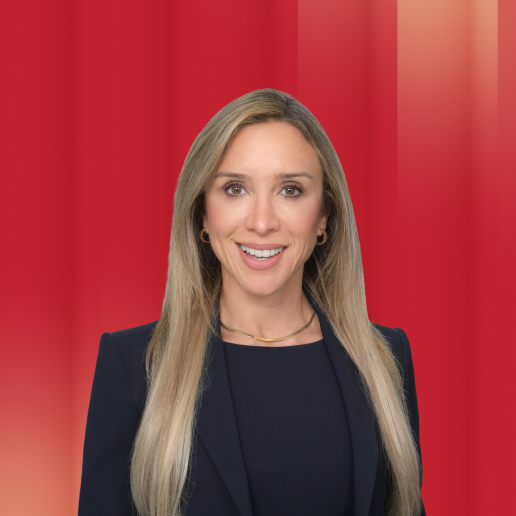
Lizbeth Flores is a corporate partner at PAG Law PLLC, where her practice focuses on cross-border technology, venture capital, and M&A transactions across Latin America. She has been named by Latinvex as one of Latin America's Top 100 Female Lawyers.
Disclaimer: This publication is provided by PAG Law PLLC for general informational purposes only and does not constitute legal advice or create an attorney-client relationship between PAG Law and the reader. The content reflects the views of the author as of the date of publication and may not reflect subsequent developments in law, regulation, or policy. Readers should not act or refrain from acting on the basis of any information contained herein without seeking professional legal counsel tailored to their specific circumstances and jurisdiction. PAG Law expressly disclaims all liability with respect to actions taken or not taken based on any or all of the contents of this publication. This material may be considered attorney advertising in some jurisdictions.

Alejandro D. Fiuza and Peter Eccles Named Among Latin America’s Top 100 International Lawyers by Latinvex for 2026
PAG Law is proud to announce that Alejandro D. Fiuza, and Peter Eccles, partners in the firm’s New York office, have once again been named among Latin America’s Top 100 International Lawyers by Latinvex

PAG Law's Honorees in the 2027 Best Lawyers in America® and Best Lawyers: Ones to Watch®
PAG Law proudly announces that eleven of its distinguished attorneys have been recognized in the prestigious 2027 Best Lawyers in America® and Best Lawyers: Ones to Watch® editions


Pag Law Recognized at the ACQ5 Global Awards 2026 as Law Firm of the Year and Juan Pablo Cappello as Lawyer of the Year
PAG Law is proud to announce its recognition as a multi-category winner at the prestigious ACQ5 Global Awards 2026, underscoring the firm's continued leadership in cross-border legal services and its strong presence across Latin America.
SUBSCRIBE
Our commitment to excellence has driven numerous
successful outcomes in complex legal matters.